
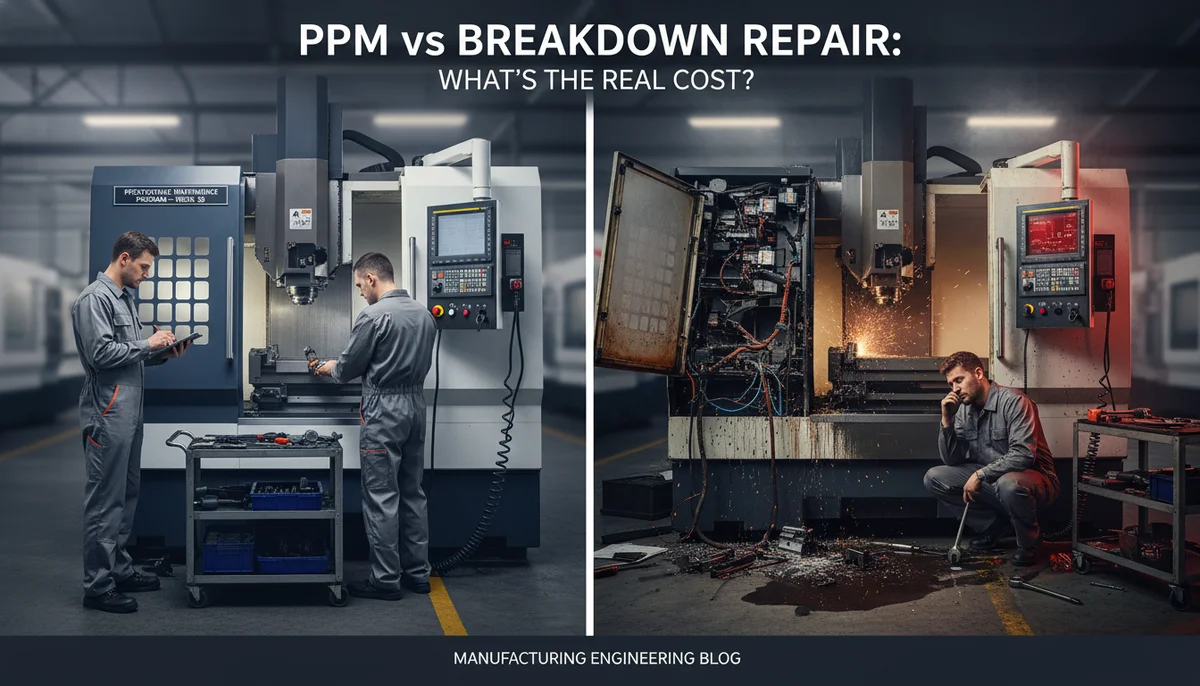
One customer running two vertical machining centres relied entirely on reactive repairs for over a year. On paper, this looked efficient because service costs only appeared when faults occurred. In practice, each failure created scheduling disruption, overnight shift losses, and expedited tooling and subcontract costs.
We reviewed twelve months of records and compared reactive spend against a structured PPM schedule. Emergency callouts, unplanned parts, and downtime-related overtime totaled significantly more than a quarterly maintenance plan would have cost. The largest hidden expense was not labour; it was missed throughput during peak order periods.
After moving to planned inspections, lubrication checks, axis backlash monitoring, and annual geometry verification, emergency incidents reduced sharply. Operators also reported fewer repeat alarms and more stable surface finish results on tighter-tolerance jobs, improving first-pass yield.
Breakdown repair remains essential when failures happen, but it should be the exception rather than the operating model. If your machine history shows recurring spindle, lubrication, or axis drive faults, a tailored PPM plan can convert unpredictable risk into manageable maintenance windows.