In today’s industrial landscape, the proximity switch stands as a fundamental component utilized across diverse sectors, facilitating the detection of an object’s proximity without direct contact. Imagine a technology capable of discerning the presence or absence of an object within a defined range, all without physical interaction.
Though seemingly miraculous, this phenomenon is firmly rooted in scientific principles, exemplifying the seamless integration of technology in our daily operations. With its pervasive influence spanning industries ranging from pharmaceuticals, brewing, and food and beverage production to dairies and beyond, the proximity switch has become an indispensable tool in the modern world.
Delving into the Mechanics of Proximity Switches
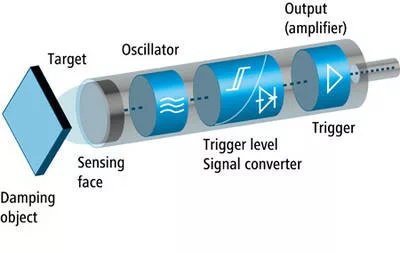
At the heart of the proximity switch lies the ingenious principle of ‘inductive coupling’. By generating an electromagnetic field, these switches promptly detect the entry of an object into the field, triggering the switch mechanism. Comprising three primary types – inductive, capacitive, and photoelectric – each variant operates uniquely, catering to a myriad of specialized applications.
Inductive switches excel in identifying metallic objects, while their capacitive counterparts extend their proficiency to both metallic and non-metallic materials. On the other hand, photoelectric switches rely on alterations in light intensity to distinguish the presence or absence of an object. Regardless of their variant, the underlying principle remains constant – the ability to detect objects without the need for physical contact.
Unlocking the Advantages of Proximity Switches
The deployment of proximity switches offers an array of benefits, starting with their contactless operation, which significantly minimizes wear and tear, consequently extending their operational lifespan. Embracing a design devoid of intricate mechanical components, these switches ensure noiseless functioning, particularly advantageous in noise-sensitive environments.
Equipped to withstand harsh conditions, including extreme temperatures and high-pressure environments, proximity switches exhibit remarkable resilience, rendering them indispensable in demanding sectors such as mining, manufacturing, and heavy machinery.
Yet, their true strength lies in their adaptability. With the capability to detect various materials, ranging from metals to glass, plastics, and liquids, and their wide-ranging applicability, from safety systems to product sorting, proximity switches manifest their versatility as an indispensable industrial tool.
Understanding Deactivation and Troubleshooting
Despite their robust nature, proximity switches, like any technological equipment, may encounter glitches requiring attention. Deactivating a proximity switch involves a systematic process, which begins with identifying the power source and subsequently disconnecting it. A crucial step involves verifying that the device is indeed switched off, often indicated by the extinguishing of an indicator light.
Troubleshooting proximity switches involves preliminary checks, such as ensuring the functionality of the power supply and the proper connection of the device. Additionally, troubleshooting specific types of switches, such as capacitive or inductive, may involve addressing issues such as material build-up or misalignment. It is prudent to consult the manufacturer’s guide or seek professional assistance for an effective troubleshooting process ensuring both safety and functionality.