The future of manufacturing is here and it’s more complicated than ever. In the old days, manufacturers had to worry about making a profit by producing as many products as possible with low-cost labor. But now that humans are no longer necessary for production, we’re seeing a shift towards efficient automation and closed-loop manufacturing.
This means that your factory may need to make fewer products than ever before–and you may have to figure out how to make less money in order to survive.
Manufacturers have been working towards closed-loop manufacturing for some time now.
You’re probably familiar with the concept of closed-loop manufacturing, even if you haven’t heard the term: It’s when a company has a complete system that uses products and materials again and again.
The most common form of closed looping is what happens when you make coffee at home with a Nespresso machine, which uses recyclable pods to brew your drink. Or think about how often you reuse plastic water bottles or aluminum cans—those are examples of closed-loop systems as well.
But in these cases, it’s still up to consumers to do something with their used goods before they’re recycled back into another product or recycled into new parts for machines that can be reused later on. The goal with these types of recycling processes is for companies to create less waste overall; however, there are other types of closed loops that have nothing to do with recycling at all!
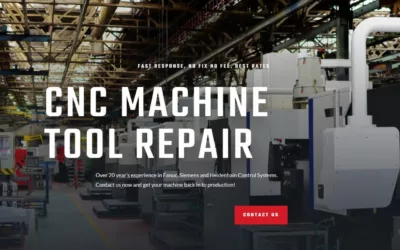
CNC machines are complex, expensive, and usually large.
CNC machines are complex, expensive and usually large. They’re used to manufacture parts for a wide range of industries: aerospace, automotive and medical are just a few examples. The machines can also be used to produce products that wouldn’t ordinarily be possible through any other method, like 3D-printed guns or customized hearing aids.
But these machines aren’t without their limitations. Even if you have one on hand, they can’t produce everything you need—and they’re not always the best choice when it comes to getting things done quickly.
The tech industry is poised to make leaps and bounds in machine learning and autonomous robots.
As you can see, the tech industry is poised to make leaps and bounds in machine learning and autonomous robots. If you’re interested in getting involved with these cutting-edge technologies, we have some tips for you:
Learn as much as possible about AI, machine learning, and robotics. There’s no better way to learn than by doing–so why not start by reading up on the topic?
Don’t be afraid to experiment with your own ideas or take inspiration from other people who are working on similar things. Machine learning is an exciting field because it allows for creative solutions that weren’t previously possible!
Factory automation is no longer just a conceptual idea.
While you may not be thinking about the idea of closed-loop manufacturing, it’s a reality that the technology industry is well on its way to bringing into fruition. In fact, it’s already happening in some instances—and here’s why you should care:
The tech industry is poised to make leaps and bounds in machine learning and autonomous robots.
It will make an enormous difference for businesses worldwide by increasing efficiency, decreasing costs of production, creating new jobs and eliminating some old ones (e.g., less manual labor).
Manufacturers will be able to better track inventory while still maintaining quality control over their products as they’re being made; this means faster turnarounds on orders without compromising quality or consistency across all batches of goods produced at once
The next step is to automate the nitty-gritty details of machine operation.
The next step is to automate the nitty-gritty details of machine operation. This means that a robot can be programmed to do small tasks—such as adjusting an air valve or moving a piece of material—without human intervention.
Manufacturing will continue to evolve, in ways that reduce the industry’s environmental impact but also allow for increased output by using less energy and fewer resources.
Industry 4.0 has laid the groundwork for closed loop factory automation to become reality.
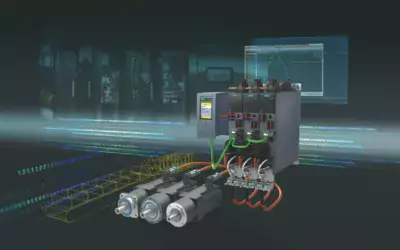
Industry 4.0 is the next step in manufacturing, in which data analytics, cloud computing and machine learning are used to gather information from IoT devices then use it to create more efficient manufacturing processes.
One area that has been slow to adopt Industry 4.0 technology has been closed-loop factory automation–but this is expected to change as technology improves and costs drop.
An explosion of new technologies has changed the manufacturing landscape forever
There’s a lot of talk about the future of manufacturing, and it’s no surprise. The term “Industry 4.0” has become ubiquitous in the discussions around this topic, referring to the fourth industrial revolution that will affect everything from supply chains to labor markets as machines increasingly take over human tasks. The manufacturing industry is changing faster than ever before, and there are several different ways it’s happening:
New technologies like 3D printing, automation and robotics are changing how manufacturers operate. These advancements allow for greater precision than ever before—and speed up production at a much higher rate than human workers could ever hope to achieve on their own. They also make it possible for smaller companies that couldn’t afford traditional manufacturing processes (like injection molding) before now find success selling their products online without having any inventory costs whatsoever!
A shift toward consumer-focused goods means more emphasis on quality control processes; this means manufacturers must follow more stringent safety procedures when making new products so they don’t cause any harm while being used by consumers who aren’t familiar with how those products work yet.”
The future of manufacturing is here, and it’s not going away anytime soon.
The technology industry has changed the face of factory automation forever, and now it’s up to you whether or not you want to be part of this revolution.